
Memphis and its Necropolis - UNESCO Site
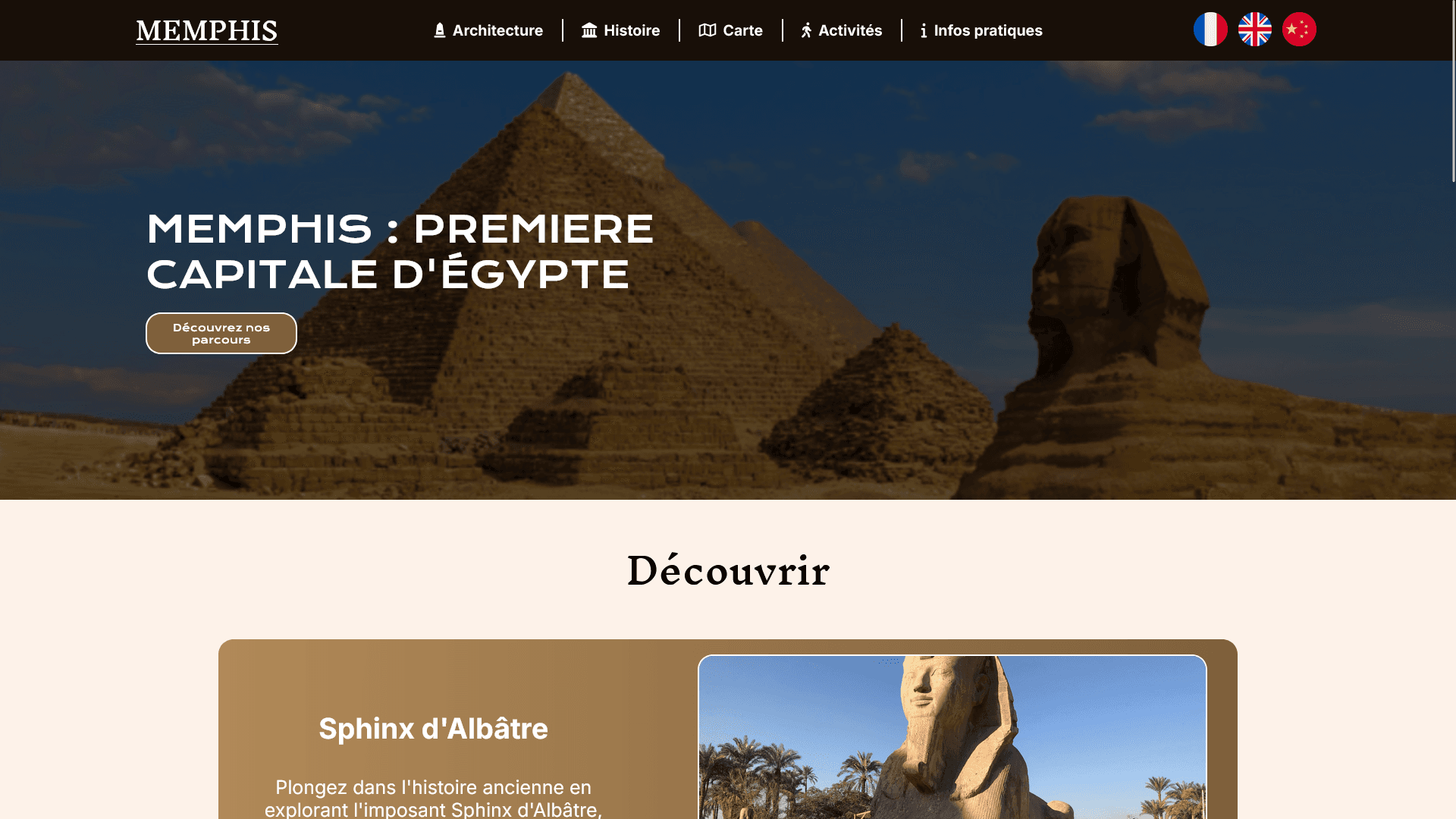
Project Overview
Multilingual cultural mediation website about Memphis and its Necropolis, created in partnership with UNESCO as part of a first-year Computer Science program.
Context & Stack
School Year
BUT 1Tech Stack
Project Details
Project Metrics
Key Features
Trilingual website
Navigation available in French, English, and Chinese with dynamic language switching.
Interactive map
Embedded Google Maps locating historical sites and points of interest around Memphis.
Admin panel
Secured administration interface for managing site articles by language.
Dynamic articles
Database-backed article system with multilingual support and prepared SQL statements.
Technical Skills
Project management
Full planning with Gantt charts, Kanban boards, Belbin roles, and deliverable tracking over one year.
User-centered design
Created personas, usage scenarios, user surveys, and beta testing to guide development decisions.
Back-end development
First steps with PHP and PostgreSQL: prepared queries, sessions, and simplified MVC architecture.
Teamwork
Collaboration in a team of 5 with clear role distribution, shared tools, and client communication.
Detailed Description
A digital cultural mediation project carried out by a team of 5 students during the first year of the BUT Computer Science program at IUT Champs-sur-Marne, in partnership with UNESCO. The website showcases the World Heritage Site of Memphis and its Necropolis in Egypt, featuring pages dedicated to history, architecture, tourist activities, an interactive Google Maps section, and practical travel information.
The project was delivered in two phases: a static site built with HTML/CSS/JavaScript (January 2024), followed by a dynamic version using PHP and PostgreSQL (June 2024). The final version includes an admin panel with authentication, a multilingual article management system backed by a database, and full translation in French, English, and Chinese.
This project stands out for its comprehensive project management approach: team roles defined using the Belbin method, a formal requirements document, user personas and scenarios, benchmarking, wireframing with Figma, Gantt chart planning, Kanban workflow via Trello, user surveys, and a beta testing phase.